
GM Buys Self-Driving Car Kit Startup; Mini Fuel Cell for Drones; & Apple’s Event
Posted: March 11, 2016 Filed under: Uncategorized | Tags: Apple, Cruise Automation, Drones, General Motors, GM, iPad, iPhones, Lyft, Miniature Fuel Cell, Pohang University, Self Driving Cars Leave a commentGeneral Motors has announced it is acquiring San Francisco based Cruise Automation, which is making sensors to turn regular vehicles into self-driving ones. Techcrunch.com reports that the price is undisclosed, but Fortune reports its over a billion dollars. GM had already partnered with Lyft. GM President Dan Ammann says the automotive giant plans to integrate the Cruise tech into its fleet of vehicle brands as soon as possible! Since GM sells about 10 million cars a year worldwide and 3 million of those in the US, that would put a substantial number of self driving cars on the roads in just a few years!
Pohang University of Science and Technology has built a miniature fuel cell they say can keep a drone in the air for an hour, rather than the usual 15-20 minutes batteries provide. Slashdot.org says the miniature fuel cells could also find their way into smartphones and other devices in the near future. The new type of fuel cell is claimed to have increased performance and higher long term durability.
Apple sent out invites to the tech media yesterday to an event at Cupertino Monday, March 21st. In their usual cryptic style, it merely says ‘Let Us Loop You In.’ It’s widely expected that Apple will show the new 4 inch iPhone SE, a revamped 9.7 inch iPad which may get the Pro designation, and new bands for the Apple Watch. Since it’s Apple, there could always be ‘one more thing!’ Stay tuned!
$30,000 or Less Tesla Preorders Next Month; Feds Rule Google Self-Driving Car IS Driver; Twitter Does Tweak Newsfeeds a Bit
Posted: February 10, 2016 Filed under: Uncategorized | Tags: $35, 000 EV, Google, Model 3, NHTSA, Non-chronological, Rebates, Self Driving Cars, Tesla, Twitter, While you were away Leave a commentElon Musk has announced that pre-orders for the small Tesla Model 3 will start in March, and that the car will be on the pavement by 2017. It will be priced at $35,000, but that’s before federal and state rebates. The federal rebate is $7500, Colorado adds another 6 grand, and California, Massachusetts, and Tennessee give you $2500. Bloomberg.com says the average car right now is 31 grand, so this is right in the sweet spot for mass production. It’s supposed to have a 200 mile range. Tesla can’t be late on this as with past launches…GM’s $30,000 Bolt EV with a 200 mile range will be out late this year.
While on the topic of future cars, the NHTSA has ruled that Google’s self-driving car is its own driver for regulatory purposes. This is a victory for Google, as it allows them to move forward with their self-driving vehicle design…without steering wheel, pedals, etc. Cnet.com reports that state rules will still apply regarding how the Googlemobiles can be operated on public roads.
There was a big uproar last week about Twitter changing its newsfeed to non-chronological. It was so big, the CEO had to come out and deny it. Now, according to thenextweb.com, Twitter has expanded and tweaked its ‘While you were away’ feature. If you have been gone a while, they will serve you tweets at the top of the feed based on what an algorithm determines you might be interested in. The feature will be on by default when it rolls out to everybody, but it’s opt-in…you can dismiss it, at least for the time being.
Apple Investigates Li-Fi for Mobile Devices; GM Quietly Buys Sidecar
Posted: January 19, 2016 Filed under: Uncategorized | Tags: Apple, General Motors, iOS, Li-Fi, Lyft, ride-sharing, Self Driving Cars, Sidecar, Uber Leave a commentNot long ago, we reported on Li-Fi, and how it could use light to replace Wi-Fi, only with much more speed and bandwidth. Now, thenextweb.com has found a reference to Li-Fi compatability in Apple’s iOS 9 code and iOS 9.1 firmware. This, along with an Apple patent dug up from 2013 that appears to be a Li-Fi transmitter point to Cupertino baking it in to iOS devices. Don’t look for it by the iPhone 7, though…the infrastructure doesn’t even exist yet…no one’s built a Li-Fi router, for example.
Recently, General Motors dropped $500 million into Uber rival Lyft. The plot thickens, and now it’s been revealed that they have quietly purchased failed rival Sidecar for $30 million. Most of the employees are moving over to GM. It looks like their plans to build autonomous vehicles specifically for ride sharing are heating up. Ford and Mercedes are also working on similar projects. Uber has lots of valuation and a head start, but it looks like the car makers are getting serious about not going the way of the buggy whip.
Google Partnering with Ford on Self-Driving Cars; Sony Working On 40% Longer-Lasting Battery
Posted: December 22, 2015 Filed under: Uncategorized | Tags: 40% longer life, Ford, Google, Lithium Ion Batteries, Magnesium-sulphur batteries, Self Driving Cars, Sony, Sulfur based batteries Leave a commentGoogle and Ford are partnering to build self-driving cars, according to a report by Yahoo Autos. Businessinsider.com says the deal should be announced at the Consumer Electronics Show in Las Vegas next month. The joint venture will create a company that builds self-driving cars using Google technology. The entity will be legally separate from Ford, partly to protect Ford from potential liability. Google has been testing out their odd looking little self driving cars on city streets for a couple years now. Ford and numerous other car makers have been hard at work on self-driving car tech. The partnership would represent Google’s first success enlisting an established car-maker to adopt its technology.
Lithium-ion batteries have been powering our phones and laptops for a long time, but there are other technologies that may work better. Sony played a key part in popularizing Li-ion batteries in the 1990s. Mashable.com reports they are now working on new, sulfur-based batteries, which could offer up to 40% better energy density per volume. That means battery life would last roughly 40% longer.The first Li-S batteries were built in the late 2000s, almost none are commercially available today, mostly due to the sulfur easily degrading. It’s unclear exactly how Sony plans to solve this problem with its new batteries. Sony is apparently also working on magnesium-sulfur (Mg-S) batteries, which are potentially both more efficient and cheaper than today’s batteries.
Sony reportedly aims to have the new batteries ready for commercial production by 2020.
iPhone 7 Possibly Waterproof; Two More Players Join Self-Driving Car Rally
Posted: December 11, 2015 Filed under: Uncategorized | Tags: Apple, Baidu, Elastomer, iPhone 7, Samsung, Self Driving Cars, Waterproof Leave a commentApple has a number of patents that never get used, but this is intriguing…Electronic Device with Hidden Connector. Bgr.com reports that the tech allows an opening like a USB port or headphone jack to automatically seal. It uses an elastomer, that expands and seals the moment a connector is removed. Not a sure thing, but rumors that the iPhone 7 might sport this technology, combined with others to prevent water damage, and make a waterproof iPhone.
Two more companies have joined to race to get self-driving cars on the road. Samsung and Baidu are dipping their toes into the water, according to theverge.com. Unlike what Apple is reportedly doing, Samsung is focusing on components for a driverless car. Baidu, however, is working on actual self-driving vehicles that could serve as public shuttles. The Chinese state news agency says they have already built a fully self-driving car based on a BMW 3 series that can hit 62 mph in a test. A former Googler is now assisting with the project.
Facebook Enters Crowdfunding; Ford Sees Self-Driving Cars in 4 Years
Posted: November 19, 2015 Filed under: Uncategorized | Tags: Android Auto, Apple, Autonomous cars, Car Play, Crowdrise, Facebook, Ford, Fundraiser, Google, Indiegogo, Kickstarter, Mcity, Self Driving Cars Leave a commentA lot of projects have been launched on Kickstarter or Indiegogo. Now, it appears that Facebook is dipping its toe into the crowdfunding pool. According to techcrunch.com, they’ve just released something called Fundraiser, which lets non-profits set up a campaign page where they can roll a video, collect cash, and let people share on their newsfeed. As it stands, Fundraiser competes with Crowdrise, but it wouldn’t take much for Facebook to drop the ‘non’ from nonprofit. With people able to donate and never leave Facebook, it will be easier than ever to fund nonprofit projects…and perhaps in the near future, FOR profit ones.
The race is really on…figuratively, at least…to autonomous cars. Recode.net reports that Ford’s CEO Mark Fields said this week that he sees completely self-driving cars on the streets within 4 years. That’s even quicker than Google’s prediction of 5 years. Ford has started testing autonomous cars at Mcity, the 30 plus acre test layout operated by the University of Michigan. Mcity has a full scale urban streets test layout. The Ford CEO also said they have plans to include Apple Car Play and Google’s Android Auto in some of the Ford line, but he didn’t specify what models or the timetable.
Uber Partners With University of Arizona on Self-Driving Cars
Posted: August 26, 2015 Filed under: Uncategorized | Tags: Mapping, Microsoft, Optics, Self Driving Cars, Uber, University of Arizona, Windows 10 Leave a commentTheverge.com says Uber is setting up a new self-driving car project at the University of Arizona. The new project will focus on self-driving car technology, particularly the mapping and optics challenges involved in developing a fully autonomous vehicle. Earlier this year, Uber went on a major hiring binge for their Pittsburgh center, which many complained had hired so many experts away from the local robotics lab that they had effectively gutted competing projects. The Arizona partnership will focus on the optics systems necessary for mapping and safety. It appears that Tucson will be a new hub for much of Uber’s ongoing research into autonomous vehicles.
It’s gotten some knocks, but in a testament to how hated Windows 8 was more than anything else, Windows 10 is now up and running on over 75 million devices in less than a month after it was rolled out. zdnet.com reports that Microsoft’s goal is to have the latest OS installed on a billion devices by this time in 2018. Some of the heat surrounding Windows 10 has come from their new privacy policy, and Redmond has now published a ‘Windows 10 and Privacy’ page which details their policies.
Google’s Self-Driving Cars Invade Texas
Posted: July 8, 2015 Filed under: Uncategorized | Tags: Apple, Austin, Google, HowLoud, iPhone 6S, Kickstarter, Mountain View, Self Driving Cars, Texas, Urban Noise Leave a commentFolks in the San Francisco Bay Area city of Mountain View have gotten used to seeing Google branded Lexus and Toyota Prius models tooling around town. Now, Google has picked Austin, Texas for it’s second test-bed city. According to cnet.com, a Google Lexus has been spotted Northeast of Downtown Austin…as in the Bay Area, with a driver aboard, just in case. A second car is slated to start driving the area this week. As with the Bay Area self-driving rigs, the speed is capped at 25 mph.
Apple is apparently preparing for even more record sales of iPhones. The Wall St Journal says they are asking suppliers to make between 85 and 90 million new iPhone 6S and 6S Plus models by the end of 2015. This compares with 70 to 80 million units they ordered of the iPhone 6 and 6 Plus they ordered last year.
A Kickstarter is launching called HowLoud, to map cities all around the country based on urban noise. Gizmodo.com reports that HowLoud…created by a CalTech mathematician…has already mapped Los Angeles and Orange County. It ranks locations specifically enough to be down to a particular side and floor of a building. Real estate company Redfin bought the WalkScore app last year that maps walkability of neighborhoods, so the noise level score of HowLoud may soon become a selling point for homes, too!
Some Early Crash Statistics on Self-Driving Cars
Posted: June 19, 2015 Filed under: Uncategorized | Tags: Delphi, Google, iBall, Microsoft, PC on a stick, Self Driving Cars 1 Comment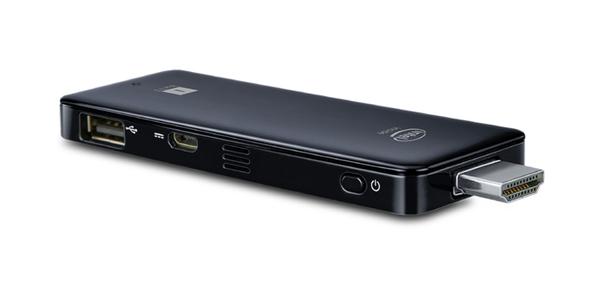
The California DMV has released brief details about 6 accidents involving self-driving cars. 9to5google.com says 5 of the 6 were Google’s, and one was from Delphi. In 100% of those crashes, the OTHER driver was at fault…not the self-driving car! No injuries occurred in any of them. This lends creedance to the thought that once all vehicles are self-driving, accident rates will plummet.
Microsoft has unveiled a $140 PC on a stick. The USB drive-sized PC runs Windows 8.1, and has an Intel Atom quad core processor with 2 gigs of ram and 32 gigs of storage. It can connect to TVs and monitors via HDMI, has a mini-usb port, and has Bluetooth. The PC on a stick is made by iBall, and goes on sale in India next month. No word on upgradability to Windows 10, or when it might be released in the US.
Starbucks Order & Pay Mobile Ordering Now in 25 States
Posted: June 16, 2015 Filed under: Uncategorized | Tags: Android, Driving app, iOS, Mobile ordering, Order & Pay, Range Rover, Self Driving Cars, Starbucks Leave a commentIf you’re wide awake, there’s a good chance caffeine is involved. Good news for coffeeholics…Starbucks expects mobile ordering to be complete nationwide this year…and according to geekwire.com, has 4000 cafes live today. The Order & Pay service is available in 25 states…amazingly, California is not one of those! This amounts to about half of Starbucks stores. You should know they don’t have plans to include the ones in grocery stores and airports. Coffee drinkers are embracing the service…19% of all US Starbucks transactions are now done from the app. Order & Pay is iOS only right now, but they will add Android users later this year.
There’s a lot of activity moving us towards self-driving cars, but you might remember the James Bond movie where Bond drives a BMW with his smartphone. Techcrunch.com reports that Range Rover has a prototype Sport model that can actually be driven from an app! It’s not intended for fast getaways from foreign spies…the speed is limited to 4 mph, and the phone has to be within 10 feet of the vehicle. Rover sees it as a possible help for tight parking spaces or for treacherous terrain. No word on its availability to the public, but Rover is working on making it use voice commands, and also keeping it super secure…so crooks can’t just hack and drive away your SUV from a distance!
 clarkreid
Recent Comments