In a rather stealthy web update Friday before the Easter weekend, California’s DMV revealed that Apple has joined 29 other companies in getting a permit to test self-driving vehicles. According to businessinsider.com, this is the first hint that Cupertino was still working on self-driving tech since a letter to the NHTSA in December. Apple will be running its tech in 3 Lexus SUVs and the permit covers 6 drivers…other than the cars themselves. It appears that Apple is working on autonomous software, and not a full car, but stay tuned.
Scientists at MIT and Cal Berkeley have developed a solar powered water harvester that can extract humidity out of thin air to produce drinking water. Thenextweb.com reports that it’s solar powered, and can produce 3 liters of water in 12 hours, in a place with only 20-30% humidity….so will even work in a desert. (The Mojave desert daytime humidity runs 10-30%.) The scientists say a person could survive in the desert on a soda can’s worth of water a day, and the gadget can produce that much water in an hour. It uses a new type of metal-organic framework, or MOF.
Apple is working on a social networking app along the lines of Snapchat and Facebook. Macrumors.com says Cupertino’s goal is for you to be able to shoot, edit, upload, and share a video in less than a minute…all with one hand! If the stars align in Silicon Valley, Apple will roll out the app in 2017.
Appleinsider.com has uncovered a patent that would allow future iPhones to snag the fingerprints and pictures of thieves. The unauthorized user’s info might be stored locally, or sent to a remote server for more evaluation. It’s not clear that such collection would be legal everywhere, even involving crooks, so it remains to be seen if this will actually be introduced on the handsets.
We reported on Uber’s imminent release of self-driving cabs in Pittsburg to test out their systems. Now, according to thenextweb.com, they’ll be #2 at it. Apparently, a firm called Nutonomy is putting the rubber on the road in Singapore today. As with the Uber test, rides will be free, and there will be a company engineer along to observe the system, and grab the controls if needed. Nutonomy was founded by a couple of robotics and intelligent vehicle tech geniuses from MIT.
A startup company hatched at MIT has cooked up a new ‘anode free’ lithium metal battery that is smaller, and has twice the energy capacity of most lithium ion batteries. This means either batteries could take up half the space, or one the same size could last twice as long. Mashable.com says the key is that the batteries have very thin, high-energy lithium-metal foil, which holds many more ions than the more widely used graphite. More ions means more energy capacity, and the batteries are twice as energy-dense as lithium-ion batteries. In addition to that, they’re also safer. The company, Solid Energy, expects to have the tech available for smartphones by next year and cars by 2018.
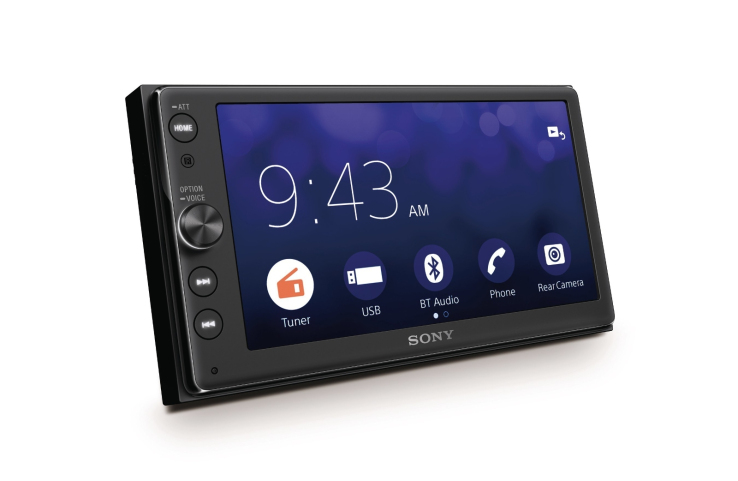
There have been aftermarket car audio systems available, but none up to now have offered both Android Auto and Apple CarPlay. According to techcrunch.com, Sony just rolled one out for $500 retail. It sports a 6.4 inch touch screen, and supports NFC, Bluetooth, has an aux input, and a dedicated hardware button for triggering voice input. The Pioneer AppRadio 4 has a similar screen, but only does CarPlay, and is $100 bucks more. Alpine’s offering is also more. Of course, you have to factor installation on any of them into the price, but on the other hand, it’s getting CarPlay or Android Auto without buying a whole new car!
Toyota is dropping an eye-popping billion dollars in a research company it’s establishing in Silicon Valley, focusing on artificial intelligence and robotics. The automotive giant is determined to lead the way with top flight self-driving cars, in addition to applying AI and robotics to other areas of life. The AP reports that the initial facility will be near Stanford, with a second one planned later on to be set up near MIT.
Google has released version 8.3 of Google Play Services, with one tap Google sign in, and better wearable sync, according to 9to5google.com. Now, you can just press ‘Sign in with Google,’ and presto…you’re done. The update also makes signing in across devices easier, with a simpler dialog. The new version is supposed to use smarter syncing for wearables, too, improving battery life.

 clarkreid
Recent Comments